Govardhan Puja: The Day Krishna Lifted a Mountain
Why we build a mountain of food the day after Diwali, and what the Govardhan pastime teaches about where gratitude belongs.
Updated 8 October 2026
The day after Diwali, when much of India is still clearing away the last of the fireworks, our temple prepares for a very different kind of celebration — one that involves not lights, but a mountain of food, offered to a hill.
The Story Behind the Hill
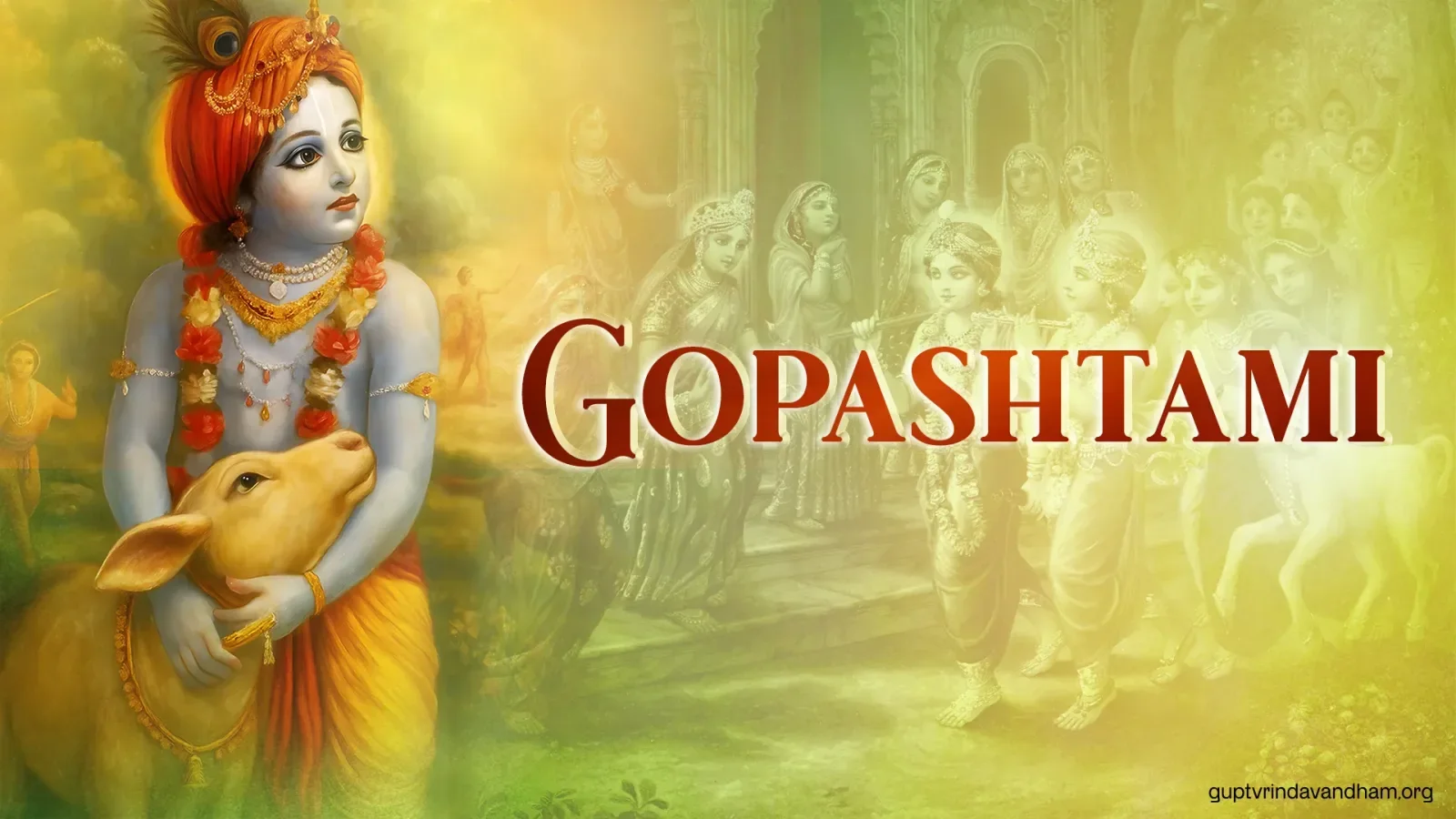
According to the Srimad-Bhagavatam, the cowherd community of Vraja once prepared an annual offering to Indra, the god of rain, in gratitude for the seasonal rains that sustained their cattle and crops. The young Krishna questioned this practice, pointing out that it was Govardhan Hill itself — providing grazing land, water, and shelter for their cows — that directly supported their daily lives, and suggested they redirect their worship there instead.
When the community followed His advice, Indra, offended, sent a devastating deluge upon Vraja. Krishna responded by lifting Govardhan Hill on the little finger of His left hand, holding it aloft like an umbrella for seven days and nights, sheltering every resident and every animal until Indra relented and the rains stopped.
Why This Matters Beyond the Miracle
Devotees often point out that the lesson embedded in this pastime has less to do with Krishna's strength and more to do with where gratitude is properly directed — toward what actually sustains us, rather than toward abstract or distant powers we assume we must appease. It is, in a sense, one of the earliest recorded arguments for a more grounded, ecologically aware form of worship.
Annakut — The Mountain of Food
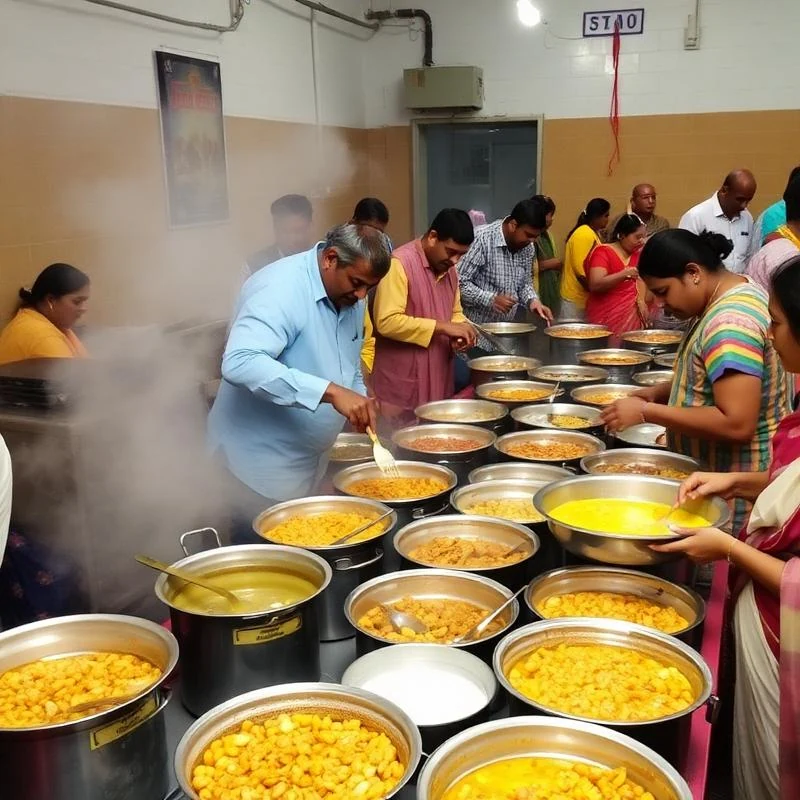
Our own Govardhan Puja observance centers on Annakut, meaning "mountain of food" — an offering built from dozens of dishes prepared and arranged before the deities, symbolically representing Govardhan Hill itself. Devotees spend the preceding day cooking in the temple kitchen, and by evening, the altar is covered edge to edge with preparations ranging from simple rice and dal to elaborate sweets, all offered together in a single, overwhelming display of abundance and gratitude.
Afterward, this prasadam is distributed to everyone present — often hundreds of plates by the time the evening ends — turning the philosophical lesson of the pastime into something immediately tangible: a shared meal, freely given.
If you visit us for Govardhan Puja, come hungry — the Annakut offering is meant to be experienced, not just observed.