Sharad Purnima: The Rasa Dance and the Cure for Lust
The autumn full moon is the night of Krishna's rasa-lila. What the Bhagavatam and Srila Prabhupada teach about this confidential pastime, and how to honour it.
Updated 8 October 2026
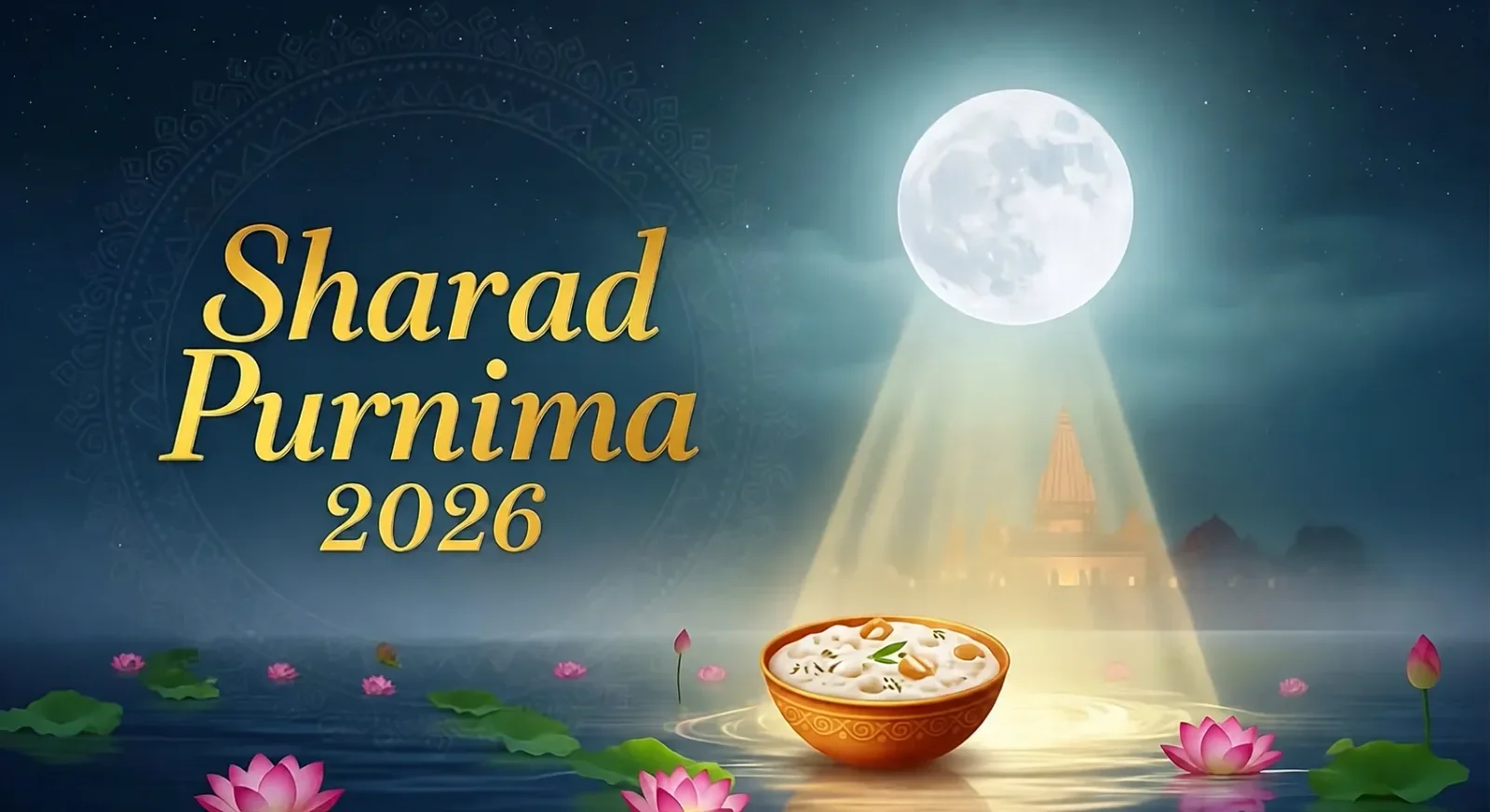
The full moon that closes the month of Ashvin is said to be the brightest of the year. The monsoon clouds have cleared, the air is cool, and the moonlight falls so brilliantly that, in many Indian homes, families leave a pot of sweet rice outside overnight to soak in its rays. This is Sharad Purnima, the autumn full moon. For devotees of Krishna it is remembered above all as the night of the rasa-lila, the most confidential pastime described in the Srimad-Bhagavatam.
Because the rasa-lila is so exalted, it is also easily misunderstood. This article explains what the scriptures and Srila Prabhupada teach about it, and how devotees can honour Sharad Purnima in the right spirit. It also arrives just as we prepare to enter the holy month of Kartik.
The Night Described in the Bhagavatam
The Tenth Canto of the Srimad-Bhagavatam devotes five chapters (SB 10.29–33) to this pastime, a section revered by Vaishnavas as the Rasa-panchadhyayi. The narration opens (SB 10.29.1) by telling us that the Supreme Lord, seeing the autumn night with its blossoming jasmine flowers, decided to enjoy pastimes, taking shelter of His internal potency, Yogamaya.
That single opening detail is important. The rasa dance is not an ordinary event arranged by material desire. It is arranged by the Lord's own spiritual energy, among His eternal associates.
The call of the flute
Krishna played His flute in the forest of Vrindavan. The gopis, hearing it, left whatever they were doing, mid-task, and ran to Him. When they arrived, Krishna tested them by speaking about their duties to their families and urging them to return home. The gopis' reply is one of the most heartfelt passages in all scripture: they explained that they had left everything for Him and that their minds and hands no longer belonged to their homes but to Him.
The Lord disappears
Krishna then danced and sported with the gopis. But when a tinge of pride entered their minds, thinking themselves the most fortunate of women, He suddenly vanished. The gopis searched for Him through the forest, asking the trees and creepers if they had seen Him, and finally sat together on the bank of the Yamuna and sang the famous Gopi-gita (SB 10.31), a song of pure longing.
The rasa dance
Moved by their separation, Krishna reappeared and the rasa dance began. By His inconceivable potency He expanded Himself so that each gopi felt He was dancing beside her alone. The Bhagavatam describes the demigods watching from the sky, showering flowers, and the night itself extending so that the pastime could be complete.
Why the Rasa-lila Is Not Ordinary Romance
King Parikshit, hearing this narration from Shukadeva Goswami, raised the very question that a modern reader might ask. How could Krishna, who came to establish religion, associate with other men's wives at night? Shukadeva's answer (SB 10.33.29–37) contains several points that every devotee should know:
- The Lord is not an ordinary person. Just as fire burns everything without being contaminated, the supremely powerful Lord is never touched by fault.
- Do not imitate. Shukadeva compares imitation of this pastime to an ordinary person trying to drink poison because Lord Shiva once drank it. One who is not the Lord should never even think of imitating Him (SB 10.33.30).
- The gopis are His own energy. Srila Prabhupada explains that the gopis are expansions of Krishna's internal pleasure potency. Their relationship with Him is completely spiritual, free from any trace of material lust.
- The gopis' husbands were not disturbed. The Bhagavatam notes that the cowherd men, bewildered by Yogamaya, thought their wives were at home beside them all along.
Srila Prabhupada repeatedly warned that the rasa-lila must be heard from a bona fide source and in the proper sequence of spiritual understanding. Those who skip straight to these chapters while still attached to sense gratification, or who try to imitate them, misunderstand Krishna completely. The proper way is to first understand Krishna's position as the Supreme Lord through the Bhagavad-gita and the early cantos of the Bhagavatam.
A Pastime That Cures Lust
The most surprising verse about the rasa-lila comes at the very end. Shukadeva Goswami says (SB 10.33.39) that anyone who faithfully hears or describes the Lord's pastimes with the gopis attains pure devotional service and quickly becomes free of lust, the disease of the heart.
This is the opposite of what an ordinary person would expect. Hearing about romance usually increases lust. But because this pastime is entirely spiritual, hearing it properly does the reverse: it replaces material desire with love for God. It works like a medicine: taken as prescribed, under proper guidance, it cures the patient.
What the gopis teach every devotee
Sri Chaitanya Mahaprabhu taught that the love of the gopis is the highest form of devotion, because it is completely free from self-interest. They did not want anything from Krishna; they wanted only to please Him. Even their desire to be with Him was for His happiness, not their own. Krishnadasa Kaviraja Goswami draws this distinction in the Chaitanya-charitamrita (CC Adi 4.165): lust is the desire for one's own pleasure, while love (prema) is the desire for Krishna's pleasure.
We may be very far from the gopis' level, but their example shows the direction of the path. Every step in bhakti is a step from "what do I want?" towards "what does Krishna want?"
How to Observe Sharad Purnima
- Offer sweet rice under the moonlight. Many devotees prepare a simple kheer (sweet rice) with milk, rice and sugar, offer it to Krishna, and honour it as prasadam.
- Chant and sing. Spend some time in the evening chanting the Hare Krishna maha-mantra, or singing a simple bhajan to Radha and Krishna.
- Hear from proper sources. If you wish to read about the rasa-lila, read Srila Prabhupada's Krishna book or the Tenth Canto with his commentaries, preferably after studying the Gita.
- Prepare for Kartik. Sharad Purnima stands at the doorway of Kartik, the month of Damodar. Use the night to make your vows for the coming month: extra rounds, daily lamp offerings and regular reading.
Spend the Autumn Full Moon With Hare Krishna Vizag
The Hare Krishna Vaikuntham Cultural Centre in Gambheeram is home to Sri Sri Radha Madan Mohan, the Divine Couple whose love the rasa-lila celebrates. We warmly invite you to take their darshan, join the evening kirtan and stay for prasadam. Check our daily schedule and the Vaishnava calendar for festival details, and if you wish to support the worship of the Deities, please visit our donation page.
May the cool moonlight of Sharad Purnima remind us of the cooling shelter of Radha and Krishna's lotus feet.