Gita Jayanti: Celebrating the Wisdom of the Bhagavad Gita
The day Krishna spoke the Bhagavad Gita to Arjuna on the battlefield of Kurukshetra — and why that conversation still matters today.
Updated 8 October 2026
The Auspicious Appearance Day of the Bhagavad-gita
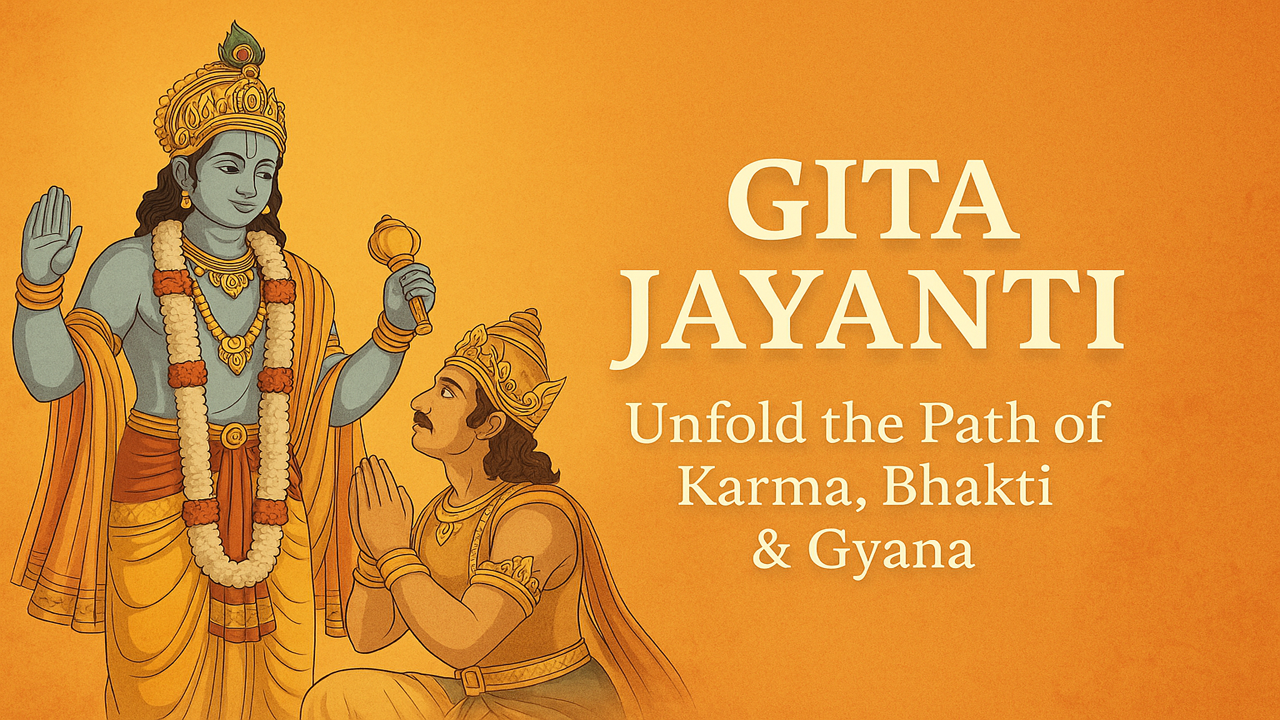
Gita Jayanti commemorates the sacred day on which Lord Sri Krishna spoke the Bhagavad-gita to His devotee and friend Arjuna on the battlefield of Kurukshetra.
Faced with a painful moral crisis, Arjuna became overwhelmed by grief and confusion. He could no longer determine his duty. At that decisive moment, he turned to Krishna for guidance. What followed was not merely encouragement for a troubled warrior, but a complete spiritual science addressing the identity of the self, the purpose of human life, the nature of action, the laws of karma, yoga, devotion and surrender to the Supreme Lord.
Gita Jayanti is therefore much more than the anniversary of a sacred book. It celebrates the descent of divine knowledge into this world.
The festival is traditionally observed on Mokshada Ekadashi, during the bright fortnight of the month of Margashirsha. In 2026, Gita Jayanti is observed on December 20.
Why the Bhagavad-gita Is Unique
The word Bhagavad-gita means “the song of the Supreme Lord.” Its seven hundred verses were spoken directly by Lord Krishna and present a clear path to self-realisation and loving devotional service.
The Gita does not ask us to abandon our responsibilities. Rather, it teaches us how to perform them with purified consciousness. Krishna shows Arjuna how ordinary work can become yoga when it is performed without selfish attachment and offered to Him.
Krishna says:
“Whatever you do, whatever you eat, whatever you offer or give away, and whatever austerities you perform—do that, O son of Kunti, as an offering to Me.”
— Bhagavad-gita 9.27
This instruction gives a practical spiritual direction for everyone. Our work, family duties, talents, possessions and daily activities can all become sacred when connected with Krishna’s service.
The First Lesson: We Are Not the Body
Much of our anxiety arises from identifying entirely with the temporary body. The Bhagavad-gita begins its spiritual instruction by explaining the eternal nature of the soul.
Just as the body changes from childhood to youth and then to old age, the conscious self remains the same. At death, the soul passes into another body. A spiritually sober person understands this distinction between the temporary body and the eternal self.
This knowledge does not make a person careless or insensitive. It gives strength, patience and a deeper sense of responsibility. When we understand that every living being is an eternal soul and a part of Krishna, compassion naturally develops.
The Gita Must Be Understood Through Parampara
The Bhagavad-gita should not be interpreted according to personal imagination. Krishna explains that its spiritual science is received through parampara, or disciplic succession. When this authorised transmission is lost, the original purpose of the teaching becomes obscured.
Arjuna understood the Gita because he accepted Krishna as the Supreme Lord and heard from Him with humility and devotion. We can follow the same principle by studying Bhagavad-gita As It Is, approaching its message through guru, sadhu and shastra rather than separating Krishna from His own words.
The Gita is not simply a book of motivational sayings. It is Krishna’s personal invitation to renew our forgotten relationship with Him.
The Central Message of the Bhagavad-gita
Throughout the eighteen chapters, Krishna explains different paths and levels of spiritual understanding. He discusses action, knowledge, meditation, the three modes of material nature, the universal form and many other subjects.
Yet all these teachings culminate in a simple and deeply personal instruction:
“Abandon all varieties of religion and just surrender unto Me. I shall deliver you from all sinful reactions. Do not fear.”
— Bhagavad-gita 18.66
Surrender to Krishna does not mean passivity or irresponsibility. It means accepting Krishna as our protector, well-wisher and ultimate shelter. It means arranging our life in a way that is favourable for remembering and serving Him.
Arjuna did not leave the battlefield after hearing the Gita. His confusion disappeared, and he acted according to Krishna’s instruction. Similarly, the true result of studying the Bhagavad-gita is clarity, devotion and determined spiritual action.
Why the Gita Remains Relevant Today
Modern society offers greater speed, comfort and access to information, yet many people continue to struggle with stress, loneliness, fear, conflict and a lack of purpose.
The Bhagavad-gita addresses the root of these difficulties. It teaches us:
- We are eternal souls, not temporary material bodies.
- Happiness cannot be secured merely through external possessions.
- Every action produces consequences.
- The restless mind can be controlled through spiritual practice.
- Krishna is the supreme proprietor, controller and well-wishing friend of all beings.
- Lasting peace comes by restoring our relationship with Him.
- The highest perfection is loving devotional service to Krishna.
The Gita does not promise that life will become free from all external difficulties. It teaches us how to face those difficulties with spiritual intelligence, steadiness and dependence upon Krishna.
How to Celebrate Gita Jayanti
1. Read the Bhagavad-gita
Begin reading Bhagavad-gita As It Is, even if you can study only one verse and its explanation each day. Regular reading is more beneficial than occasional hurried study.
2. Hear Gita Discourses
Attend a temple programme or hear from devotees who present the Bhagavad-gita faithfully through the disciplic succession. Hearing in devotional association helps us understand and apply Krishna’s teachings.
3. Recite the Verses
Many temples observe Gita Jayanti by reciting all eighteen chapters of the Bhagavad-gita. Families may also read selected chapters together at home.
4. Chant the Hare Krishna Maha-mantra
The teachings of the Gita become easier to understand when the heart is purified. Chant attentively:
Hare Krishna Hare Krishna
Krishna Krishna Hare Hare
Hare Rama Hare Rama
Rama Rama Hare Hare
5. Offer Your Work and Food to Krishna
Prepare pure vegetarian food with devotion, offer it to Krishna and honour the sanctified food as prasadam. Try to perform your daily responsibilities in a mood of service, following the instruction of Bhagavad-gita 9.27.
6. Participate in Gita Daan
Offering or distributing copies of the Bhagavad-gita is a meaningful service. A person who receives the Gita receives an opportunity to understand the soul, remember Krishna and begin the journey of devotional life.
Let the Gita Enter Our Lives
The greatest offering we can make on Gita Jayanti is to sincerely follow Krishna’s instructions.
We may begin with one verse a day, a few minutes of attentive chanting, the offering of our food, or a conscious effort to remember Krishna while performing our duties. Small but sincere practices gradually transform the heart.
May this Gita Jayanti inspire us to move from confusion to clarity, from fear to faith, and from material identification to loving service at the lotus feet of Lord Sri Krishna.
Hare Krishna!