Vyasa Puja: Why Disciples Celebrate the Spiritual Master
Why is a guru's appearance day called Vyasa Puja? A look at disciplic succession, the position of the spiritual master, and how to honour Srila Prabhupada daily.
Updated 8 October 2026
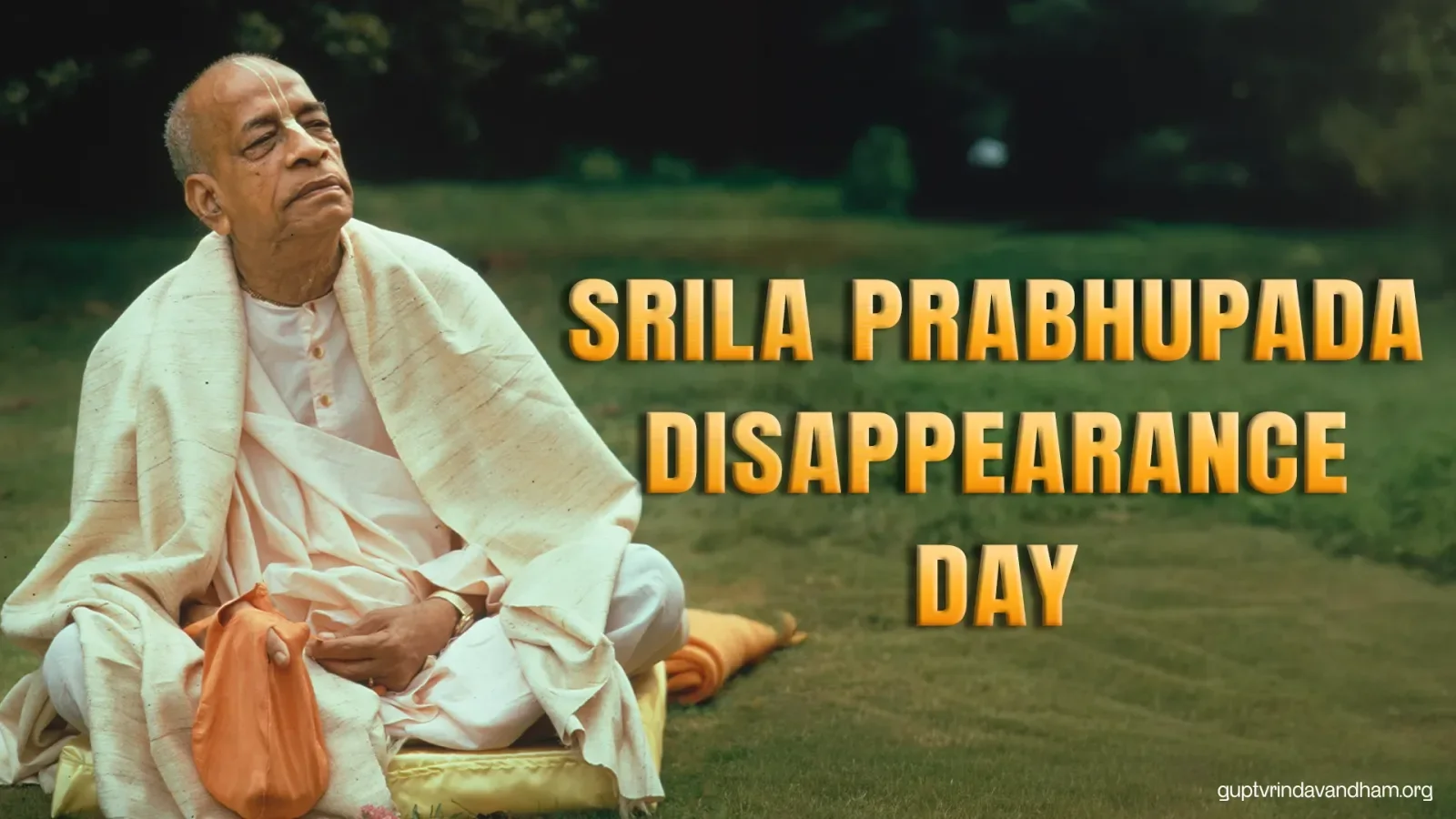
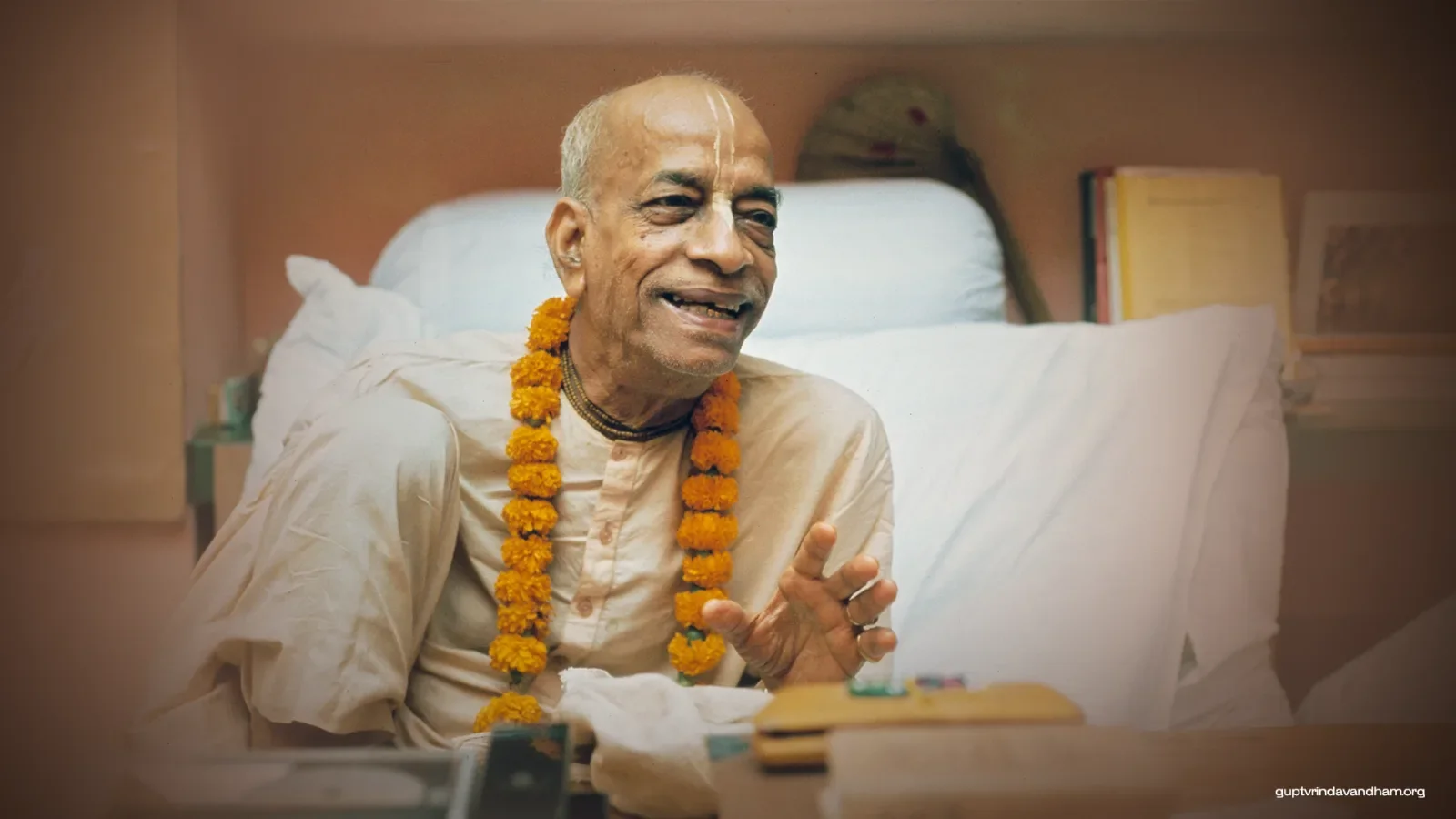
Every year, on the day after Janmashtami, devotees in ISKCON temples gather before a decorated vyasasana and a murti of Srila Prabhupada. One by one they read out letters addressed to him, offer flowers at his feet, perform arati and sing prayers in his glorification. Then everyone sits down to a feast. To a newcomer this might look like a birthday celebration for a respected teacher. It is in fact something much deeper. The day is called Vyasa Puja, and understanding it opens a window into how Krishna consciousness is passed from heart to heart.
This year's Vyasa Puja has passed, but its meaning is relevant every day for anyone who wants to make spiritual progress.
Why "Vyasa" Puja?
Srila Vyasadeva is the literary incarnation of the Lord who compiled the Vedas, the Puranas, the Mahabharata (which contains the Bhagavad-gita), and finally his mature work, the Srimad-Bhagavatam. All the Vedic knowledge we have today comes to us through him. He is therefore considered the original guru of all who follow the Vedic path.
A bona fide spiritual master does not invent his own philosophy. He faithfully repeats what Vyasadeva and the previous acharyas have taught, without addition or subtraction. Because he sits on the seat of Vyasa as Vyasadeva's representative, the honour given to him is called Vyasa Puja, worship of Vyasa. The seat on which the guru sits to speak is likewise called the vyasasana.
The chain of disciplic succession
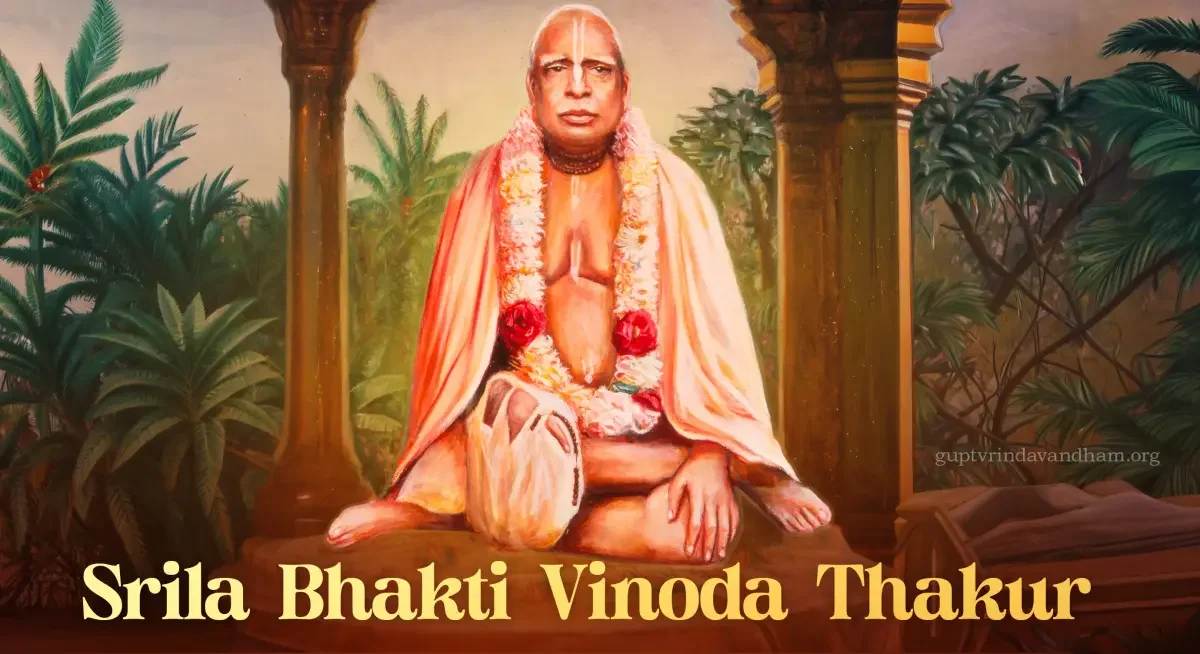
In the Bhagavad-gita (Bg. 4.2), Lord Krishna explains that this supreme knowledge was received through the chain of disciplic succession, and that when the succession was broken the knowledge appeared to be lost. Spiritual knowledge is not something one can discover through personal research alone. It is received, the way a lamp is lit from another lamp. Srila Prabhupada belongs to the Brahma-Madhva-Gaudiya sampradaya, which descends from Lord Krishna through Brahma, Narada, Vyasa, Madhvacharya, Sri Chaitanya Mahaprabhu, the six Goswamis of Vrindavan, and later Srila Bhaktivinoda Thakura, Srila Gaurakishora Dasa Babaji and Srila Bhaktisiddhanta Sarasvati Thakura, Prabhupada's own spiritual master.
What Scripture Says About the Spiritual Master
The Vedic literature speaks of the guru with great respect, but always for a specific reason: he is the transparent medium through whom Krishna's mercy reaches us.
- Approach and inquire. In Bg. 4.34 Krishna instructs Arjuna to approach a spiritual master, inquire submissively and render service, because the self-realised soul can impart knowledge, having seen the truth.
- The acharya as the Lord's representative. In the Srimad-Bhagavatam (SB 11.17.27), the Lord tells Uddhava to know the acharya as non-different from Himself and never to envy him or regard him as an ordinary man.
- Mercy through the guru. In his famous Gurvashtakam, Srila Vishvanatha Chakravarti Thakura explains that by the guru's mercy one receives the mercy of Krishna, and without his grace one cannot advance.
This does not mean the guru is God. Gaudiya Vaishnava siddhanta is clear that the spiritual master is the most confidential servant of God, and he is honoured as good as God because he faithfully delivers God's message. His position is that of a servant, and the more perfectly he serves, the more worthy he is of honour.
What Happens on Vyasa Puja
Homage offerings
The heart of the ceremony is the reading of homage offerings. Disciples and followers write personal letters to the spiritual master, expressing gratitude for what he has given them and reflecting on how they can serve his mission better. In ISKCON these offerings to Srila Prabhupada are often compiled into a book every year. Writing one is a powerful exercise in self-examination: what have I received, and what am I doing with it?
Puja and pushpanjali
The murti of the spiritual master is worshipped with arati, and devotees offer flower petals (pushpanjali) while chanting his pranama mantra. This physical act of offering makes the inner gratitude visible.
A feast offered to the guru
Large offerings of food are prepared, offered to Krishna, then to the spiritual master, and distributed as prasadam. In the Vaishnava tradition, the remnants of the guru's plate are considered especially sacred.
Gratitude in Action
Srila Prabhupada set the example of how a disciple should honour his own guru. Instructed by Srila Bhaktisiddhanta Sarasvati Thakura to preach Krishna consciousness in English, he spent decades preparing, wrote and published his translations of the Srimad-Bhagavatam himself, and at an advanced age sailed to America with very little money to fulfil that order. His Vyasa Puja to his own guru was not a single day of flowers; it was his entire life.
This tells us what real Vyasa Puja means. Flowers and speeches are beautiful, but the spiritual master is most pleased when his instructions are followed. In Prabhupada's case those instructions are simple and clear: chant the Hare Krishna maha-mantra daily, follow the regulative principles, read his books, honour prasadam, and share this knowledge with others.
Keeping the Spirit of Vyasa Puja Through the Year
You do not need to wait for next year's ceremony to honour the spiritual master. Here are practical ways anyone can carry the mood forward:
- Read daily. Even ten or fifteen minutes of reading the Bhagavad-gita As It Is or the Srimad-Bhagavatam keeps you in Prabhupada's association.
- Chant attentively. Set a fixed number of rounds of japa each day and try to hear each name clearly.
- Write your own offering. Even if you are not initiated, write a short letter of gratitude to Srila Prabhupada. Keep it, and read it again next year to see how you have grown.
- Help distribute his books. Prabhupada considered book distribution one of the most important services. Sponsoring a Bhagavad-gita for a student or a library is a direct way to assist his mission.
- Associate with devotees. The spiritual master's instructions are best understood and followed in the company of others who are trying to follow them too.
Honour Srila Prabhupada at ISKCON Visakhapatnam
The Hare Krishna Vaikuntham Cultural Centre exists because of Srila Prabhupada's vision. Every kirtan, every plate of prasadam and every book that goes out from our temple is part of his Vyasa Puja that continues all year long. Learn more about his life on our founder page, sponsor the distribution of his Bhagavad-gita through Gita Daan Seva, or come and serve with us as a volunteer.
Gratitude, after all, is best expressed not only in words but in service.