Why Every Ceremony Opens and Closes With Song
The devotional poetry sung during Mangala Arati and other temple ceremonies, and why learning the tunes is itself a form of seva.
Updated 8 October 2026
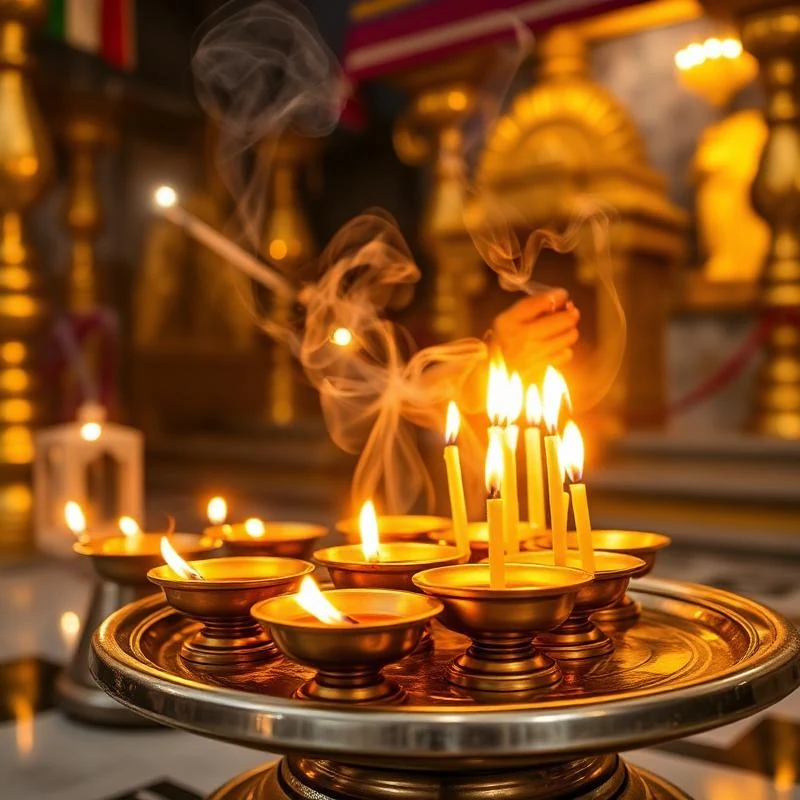
Long before sunrise, while most of the city still sleeps, our temple is already alive with music. Mangala Arati begins at 4:30 AM, and the songs sung during those early morning hours are not incidental — each one carries centuries of devotional tradition and a very specific purpose in the order of worship.
Why Music Opens and Closes Every Ceremony
In the Gaudiya Vaishnava tradition, formal worship is rarely silent. Every arati — the ceremonial offering of light, incense, and other items to the deities — is framed by song, typically compositions written by past acharyas in the disciplic line. These are not chosen arbitrarily; each song corresponds to a particular time of day or a particular stage of the ceremony, and singing them in sequence is considered part of the etiquette of worship itself.
The earliest morning prayers, for instance, are addressed first to the spiritual master before turning to the deities — a reminder that access to Krishna, in this tradition, is understood to come through the guru rather than around him. Later in the day, different songs accompany the Guru Puja ceremony, the Bhagavatam class, and the evening arati, each shifting in mood from reverent to celebratory depending on the hour.
Devotional Poetry as Living Practice
Many of these compositions were written by Bhaktivinoda Thakura, Narottama Dasa Thakura, and other 16th-to-19th-century Vaishnava poet-saints, whose verses are still sung daily in temples across the world exactly as they were composed, often in Bengali or Sanskrit rather than translated into the local language. Learning to sing them is itself considered a form of seva — new devotees at our temple often begin their involvement precisely here, joining the kirtan group and slowly learning the tunes and rhythms passed down through generations of practitioners before them.
An Invitation, Not a Performance
Unlike a concert, temple kirtan is understood as participatory rather than something to be watched — visitors are always welcome to clap, sing along even without knowing the words yet, or simply sit with the sound. Many long-time devotees describe their first real connection to this tradition beginning not with a philosophical concept, but with a melody that stayed with them long after they left the temple that day.
If you visit us for Mangala Arati, don't worry about knowing the words — the tunes have a way of teaching themselves.