Bhishma Panchaka: The Five-Day Vow at the Close of Kartik
The last five days of Kartik honour Bhishmadeva, who remembered Krishna on a bed of arrows. His story, Utthana Ekadashi, and how to keep the vow sensibly.
Updated 8 October 2026
The month of Kartik builds steadily toward a finish. After weeks of evening lamp offerings, extra chanting and festivals, the last five days arrive with a special invitation: to complete the month with a short but intense vow of austerity and remembrance. These five days, from Utthana Ekadashi to Kartik Purnima, are known as Bhishma Panchaka.
Kartik Purnima falls on 24 November 2026 according to ISKCON calendars, so Bhishma Panchaka will be observed in the days just before it. Because the Ekadashi date can differ by a day depending on location, please confirm the start date for Visakhapatnam on our Vaishnava calendar.
Who Was Bhishmadeva?
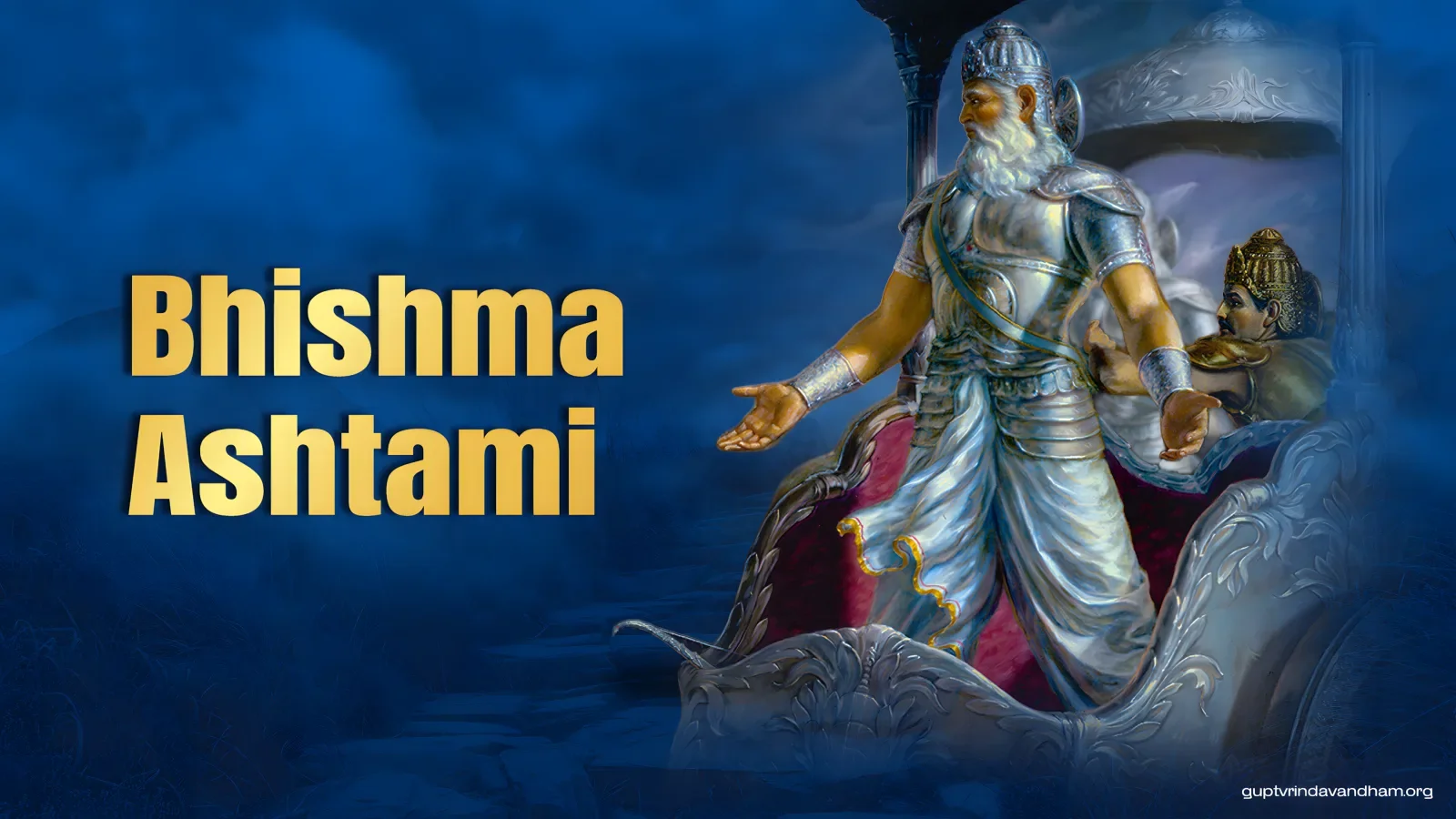
Bhishma, the son of King Shantanu and the sacred river Ganga, is one of the towering figures of the Mahabharata. As a young prince he took a vow of lifelong celibacy and renounced his claim to the throne so that his father could marry again. The vow was so severe that he became known as Bhishma, "the one of the terrible vow."
Throughout his long life he was a great warrior, a teacher of statecraft and a grandsire to both the Pandavas and the Kauravas. More importantly for Vaishnavas, he was a great devotee of Lord Krishna. The Srimad-Bhagavatam names him among the twelve mahajanas, the great authorities on devotional service (SB 6.3.20), alongside Brahma, Narada, Lord Shiva, Prahlada and others.
Fighting on the wrong side
Because of his obligations to the throne of Hastinapura, Bhishma fought for the Kauravas at Kurukshetra, against the Pandavas whom he loved and against Krishna, who served as Arjuna's chariot driver. Krishna had promised not to take up weapons in the battle. But Bhishma had vowed to make Him do so, and fought so fiercely against Arjuna that Krishna leapt from the chariot and rushed toward him holding a chariot wheel. The Lord broke His own promise to keep the promise of His devotee, a moment Bhishma remembered with joy (SB 1.9.37).
The Prayers From the Bed of Arrows
Struck down by Arjuna's arrows, Bhishma lay on a bed of arrows for many days, waiting for the auspicious time of the sun's northern course to leave his body, a choice he had been granted by boon. In the First Canto of the Srimad-Bhagavatam (SB 1.9), Krishna brings the Pandavas to his side. Great sages gather. Bhishma gives instructions on religion and duty to Maharaja Yudhishthira, and then, with his eyes fixed on Krishna, offers his final prayers.
These prayers (SB 1.9.32–42) are among the most moving in the Bhagavatam. Bhishma does not remember Krishna in His opulence in Vaikuntha. He remembers Him on the battlefield: His face covered in the dust raised by the horses, His hair scattered, His body wounded by Bhishma's own arrows, His armour shining as He drove Arjuna's chariot. Bhishma, a devotee in a heroic mood, loved Krishna most as the chivalrous Lord who fought for His friend.
Having offered these prayers, Bhishma merged his mind, words and vision in Krishna and left his body (SB 1.9.43). This is the perfection of life described in the Bhagavad-gita (Bg. 8.5): whoever remembers Krishna at the time of death attains Him.
The Vow of Bhishma Panchaka
Tradition associates the final five days of Kartik with Bhishmadeva, and the Hari-bhakti-vilasa, the Vaishnava rule book compiled by Srila Gopala Bhatta Goswami with Srila Sanatana Goswami, describes the observance of this vow. It is considered especially powerful for spiritual advancement, coming at the very end of the holiest month.
The spirit of the vow
The essence of Bhishma Panchaka is simplification and absorption. For five days, devotees reduce their bodily demands and increase their remembrance of the Lord. In the mood of Bhishma, who remembered Krishna while lying on arrows, the small austerities we accept become a means of focusing the mind.
Levels of observance
The traditional vow describes a very strict fast. Recognising that people's capacities differ, devotees observe it at various levels:
- Strict observance: fasting as fully as one's health permits, taking only very limited sanctified foods each day.
- Moderate observance: taking only fruits, roots and milk products for the five days.
- Simple observance: taking one simple meal a day of plain, sattvic food (called havishya), avoiding spices and rich preparations, and keeping strict Ekadashi rules on the Ekadashi itself.
Austerity should never endanger health. Those who are elderly, unwell, pregnant, or doing hard physical work should observe in a gentle way and seek guidance from senior devotees. A verse from the Padma Purana, quoted in the Chaitanya-charitamrita (CC Madhya 22.113), explains that all rules and prohibitions serve one purpose: to always remember Krishna and never forget Him. The vow is a means to that end, not a test of physical endurance.
Utthana Ekadashi: The Lord Awakens
Bhishma Panchaka begins on Utthana Ekadashi, also called Prabodhini or Haribodhini Ekadashi. Four months earlier, on Shayana Ekadashi, Chaturmasya began with Lord Vishnu entering His mystic sleep. Utthana Ekadashi celebrates His rising. Chaturmasya comes to a close, and in many places the next day sees the celebration of the marriage of Tulasi Devi with the Lord in His Shaligrama form. In ISKCON calendars this Ekadashi also marks the disappearance day of Srila Gaurakishora Dasa Babaji, the spiritual master of Srila Bhaktisiddhanta Sarasvati Thakura.
Practical Ways to Observe Bhishma Panchaka
- Choose your level of fasting in advance, and keep it steadily for the five days.
- Read Bhishma's prayers. Read SB 1.9 slowly, one portion each day, with Srila Prabhupada's purports.
- Increase your chanting. Add a few rounds each day, and try to chant with attention.
- Keep offering lamps. Continue the Kartik practice of offering a lamp to Damodar every evening until Kartik Purnima.
- Serve Tulasi. Water and circumambulate Tulasi Devi each day.
- Give charity in the Lord's service, completing your Kartik with generosity.
Finish Kartik Strong With Hare Krishna Vizag
The last days of Kartik are a wonderful time to visit the Hare Krishna Vaikuntham Cultural Centre in Gambheeram, offer a lamp to the Lord and associate with devotees. Find fasting guidelines on our Ekadashi page, programme timings on the daily schedule, and ways to give on our donation page, including Anna Daan Seva to feed others while you fast.
May the remembrance of Bhishmadeva, who fixed his mind on Krishna even on a bed of arrows, inspire us to fix our minds on the Lord through every circumstance of life.