Navaratri and Dussehra Through Vaishnava Eyes
How do Krishna's devotees understand Durga Devi and Vijaya Dashami? The Brahma-samhita, the Gita and Lord Rama's victory over Ravana explain.
Updated 8 October 2026
October in Andhra Pradesh is festival season. Streets fill with Dasara decorations, homes set up displays, and the air carries the sound of devotional songs for nine nights. Many people who visit ISKCON Visakhapatnam during this time ask a sincere question: how do Vaishnavas, devotees of Lord Krishna, understand Navaratri and Dussehra?
The answer is neither dismissive nor confused. Gaudiya Vaishnavas, following Srila Prabhupada, respect Goddess Durga deeply and celebrate Vijaya Dashami joyfully, but they understand both in relation to the Supreme Lord. This article explains that understanding using the Bhagavad-gita and the Brahma-samhita.
Who Is Durga Devi?
The Brahma-samhita, a prayer of Lord Brahma that Sri Chaitanya Mahaprabhu found in South India and treasured, contains a verse that explains Durga's position with great clarity (Bs. 5.44). It says that the external potency, Maya, who is the agent of creation, maintenance and destruction of this world, is known as Durga, and that she acts like a shadow of the spiritual potency, following the will of Govinda. Brahma concludes by offering obeisances to Govinda, the original Lord.
In other words, Durga is the powerful energy of the Lord who manages the material world. Her very name suggests a fortress (durga), the prison-house of the material universe in which conditioned souls are kept until they turn back towards Krishna. She is not an independent rival to God; she is His faithful servant, carrying out His will with tremendous power.
Krishna confirms this in the Gita
In Bg. 7.14, Lord Krishna describes His divine energy, made of the three modes of material nature, as very difficult to overcome. But He immediately adds that those who surrender to Him can easily cross beyond it. This is the key to the Vaishnava view. Durga's role is to test, discipline and finally release the conditioned soul. The quickest way to win her favour is to surrender to her master, Krishna.
Durga in Krishna's Own Pastimes
Vaishnavas do not ignore the goddess; she appears with honour in Krishna's own story. At the time of Krishna's birth, Yogamaya, the Lord's internal potency, took birth as the daughter of Yashoda. When Vasudeva exchanged the infants and Kamsa tried to kill the girl, she slipped from his hands and appeared in the sky as an eight-armed goddess, warning Kamsa that his enemy had already been born (SB 10.4.9–12).
Later, the young unmarried gopis of Vrindavan worshipped the goddess Katyayani on the bank of the Yamuna for a full month, praying for only one thing: that Krishna would become their husband (SB 10.22.4). This is the Vaishnava way of honouring the goddess: with a prayer for devotion to Krishna, not for material power.
Why Vaishnavas avoid worship for material gain
In Bg. 7.20 and Bg. 9.23, Krishna explains that people whose intelligence is taken away by material desires approach various demigods for specific benefits, and that such worship ultimately goes to Him, but indirectly and with temporary results. Srila Prabhupada therefore taught devotees to respect all demigods as servants of the Lord, while directing their worship to Krishna Himself, from whom all blessings flow.
Dussehra: The Victory of Lord Rama
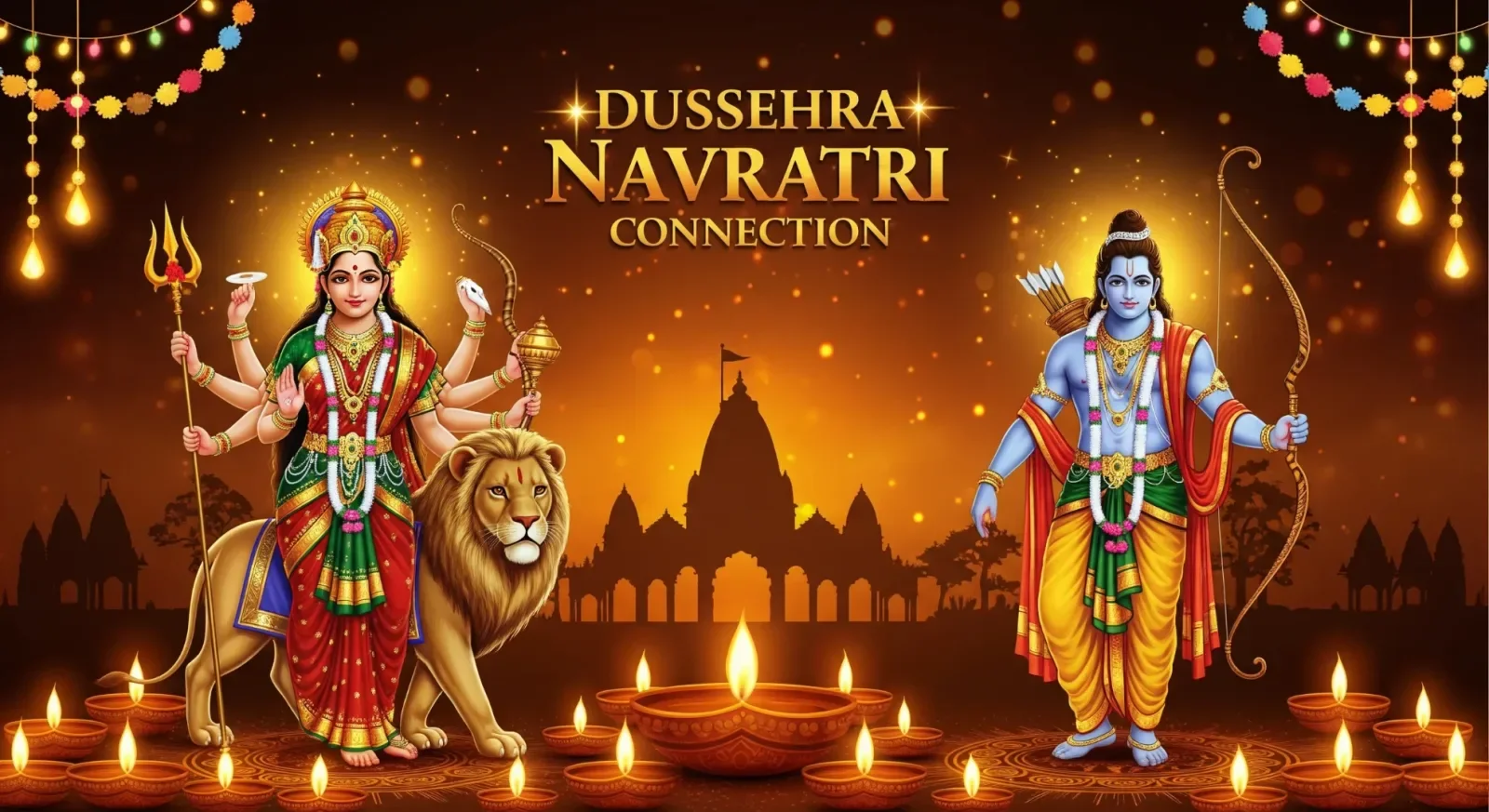
For Vaishnavas, Vijaya Dashami is above all the celebration of Lord Ramachandra's victory over Ravana. In ISKCON temples it is often observed as Rama Vijayotsava, the festival of Rama's victory. The pastimes of Lord Rama are summarised in the Ninth Canto of the Srimad-Bhagavatam (SB 9.10–11) and told in full in the Ramayana of Valmiki.
Ravana's real mistake
Srila Prabhupada often pointed out the lesson of Ravana for modern society. Sita Devi is Lakshmi, the goddess of fortune, eternally belonging to Lord Rama. Ravana was powerful, learned and wealthy, but he wanted to enjoy Lakshmi without Narayana. He tried to take the Lord's energy for his own pleasure, separated from its rightful owner, and the result was the destruction of his entire kingdom.
Prabhupada compared this to any civilisation that tries to enjoy the resources of nature while forgetting the Lord who owns them. Wealth, beauty and power are Krishna's energy. Used in His service, they bring peace. Used for selfish enjoyment, they bring ruin.
The burning of effigies, understood rightly
Across India, effigies of Ravana are burned on Dussehra. The spiritual meaning is not simply the defeat of a villain from history. It is the defeat of the "Ravana" within: the desire to possess and enjoy independently of God, along with its companions lust, anger and pride. In Bg. 16.21 Krishna names lust, anger and greed as the three gates leading to degradation. Dussehra is a good day to resolve to close those gates.
Heroes of Devotion in the Rama Lila
The Ramayana is full of examples of pure service that devotees can meditate on during this season:
- Hanuman, whose every act was for Rama's pleasure, and who is honoured by Vaishnavas as an ideal servant.
- Lakshmana, who left the comforts of the palace to serve his brother in the forest.
- Bharata, who refused the throne and ruled only as Rama's representative, placing Rama's sandals on the royal seat.
- Vibhishana, who left his powerful brother Ravana and surrendered to Rama, and was immediately accepted.
How Devotees Can Observe This Season
- Offer respect to the goddess as Krishna's servant. When you see Durga's image, offer your respects and pray to her for devotion to Krishna, as the gopis did.
- Read the Rama lila. The Ninth Canto chapters on Lord Rama are short and can be read aloud with family over the festival days.
- Chant Lord Rama's names. The maha-mantra itself contains the name Rama: Hare Krishna Hare Krishna Krishna Krishna Hare Hare, Hare Rama Hare Rama Rama Rama Hare Hare.
- Celebrate with prasadam, not intoxication. Festival seasons can bring temptation. Keep the celebrations sattvic: vegetarian food offered to the Lord, kirtan and good association.
- Give charity in the Lord's service. Instead of using wealth like Ravana, use it like Bharata, as something held in trust for the Lord.
Celebrate the Victory at ISKCON Visakhapatnam
As Dasara gives way to Sharad Purnima and the holy month of Kartik, the Hare Krishna Vaikuntham Cultural Centre in Gambheeram welcomes families to take darshan, join the kirtan and honour prasadam. Look at our festivals page and events for upcoming celebrations, or support the free food programme through Subhojanam as your Dasara offering.
The true victory of Vijaya Dashami is the victory of devotion over selfishness. May Lord Rama grant that victory to us all.