Your Kartik 2026 Checklist: Simple Vows for Damodar Month
Kartik (Damodar month) runs from 26 October to 24 November 2026. A practical guide to choosing vows, offering lamps and the festivals within the month.
Updated 8 October 2026
Ask any devotee which month of the year they look forward to most, and many will answer without hesitation: Kartik. Known among Vaishnavas as Damodar month, Kartik is considered especially dear to Lord Krishna. Devotional activities performed during this month are said to bring far greater spiritual benefit than at other times, and temples everywhere glow each evening with rows of ghee lamps offered to the Lord.
According to ISKCON Vaishnava calendars, the Kartik (Damodar) month in 2026 begins on 26 October and concludes on Kartik Purnima, 24 November. That gives us a few weeks to prepare. This practical guide will help you choose your Kartik vows, whether this is your first Kartik or your twentieth.
Why Kartik Is So Special
The Puranas, especially the Padma Purana, glorify Kartik as the best of months. Srila Rupa Goswami, in his Bhakti-rasamrita-sindhu (presented by Srila Prabhupada as The Nectar of Devotion), lists the observance of the Kartik vow, known as Urja-vrata, among the recommended practices of devotional service, and mentions that observing it in Mathura-Vrindavan is especially valuable.
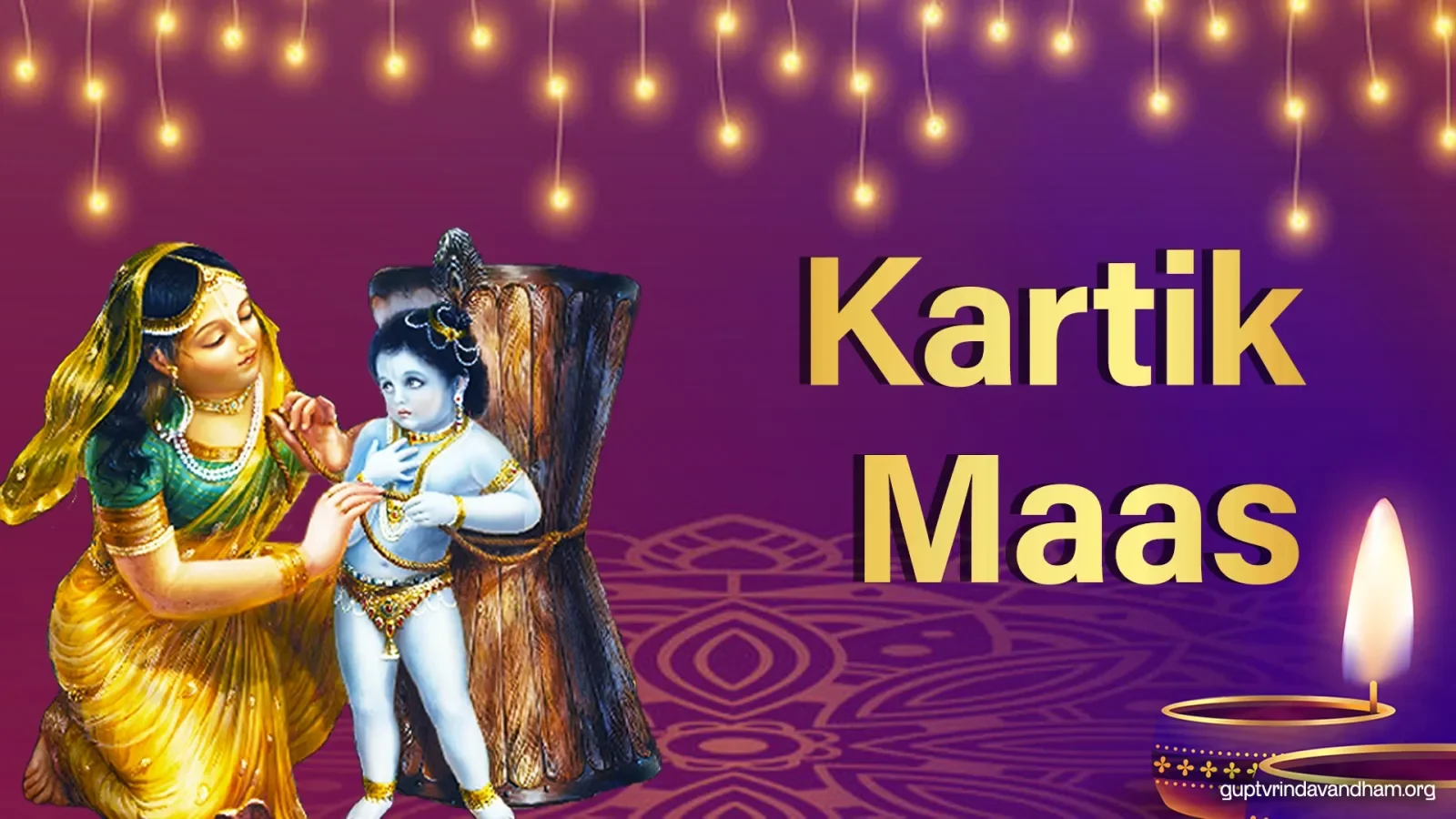
Kartik is named "Damodar" after the pastime in which mother Yashoda bound child Krishna with ropes around His waist (dama means rope, udara means waist), described in the Srimad-Bhagavatam (SB 10.9). In this pastime the all-powerful Lord allowed Himself to be controlled by the pure love of His devotee. Kartik celebrates that sweetness: a God who can be "bound" by love.
The final month of Chaturmasya
Kartik is also the last of the four months of Chaturmasya, the rainy-season period of increased austerity. Following the standard taught by Srila Prabhupada, devotees who observe Chaturmasya avoid urad dal during this fourth month. Chaturmasya closes with Utthana Ekadashi, when the Lord is said to rise from His mystic sleep, and the five days from that Ekadashi to the full moon are observed as Bhishma Panchaka.
The Core Kartik Practice: Offering a Lamp to Damodar
If you take up only one vow this Kartik, take up this one. Every evening, offer a small ghee lamp to a picture of Lord Damodar (or Radha-Krishna) while singing the Damodarashtakam, the eight-verse prayer spoken by Satyavrata Muni and recorded in the Padma Purana. Srila Prabhupada recommended that devotees sing this prayer daily during Kartik.
Here is a simple way to do it at home:
- Set up a small altar with a picture of Damodar or Radha-Krishna.
- Prepare a small lamp with a cotton wick soaked in ghee.
- Light the lamp and, holding it in your right hand, slowly offer it in circles before the Lord while you or your family sings the Damodarashtakam.
- Invite children, guests and elderly family members to offer the lamp too. In Kartik it is considered auspicious even to help someone else offer a lamp.
Choosing Your Kartik Vows
A vow (vrata) is most beneficial when it is realistic and kept steadily. It is better to take one small vow and keep it all month than to take five and abandon them in the second week. Consider choosing one or two from each category below.
Vows of hearing and chanting
- Chant a fixed number of extra rounds of japa each day (for example, two or four rounds more than usual).
- Read a chapter of the Srimad-Bhagavatam or Bhagavad-gita daily. The Tenth Canto chapters on Krishna's childhood (SB 10.5–10.11) are ideal for Kartik.
- Listen to a class or kirtan every day, at the temple or at home.
Vows of austerity
- Rise early, ideally before sunrise, and begin the day with prayer and chanting.
- Give up something you enjoy but do not need: a habitual snack, excessive phone use, or entertainment that agitates the mind.
- Follow Ekadashi fasting carefully on each Ekadashi of the month.
Vows of service
- Offer water and circumambulate a Tulasi plant daily.
- Help with temple service: cleaning, cooking, flower decoration or festival arrangements.
- Give in charity during the month: feeding people with prasadam, protecting cows, or distributing the Bhagavad-gita.
Vows of association
- Visit the temple more often, especially for the evening Damodar arati.
- Invite friends or relatives to offer a lamp with you. Sharing Kartik with others is a service in itself.
Festivals Within Kartik
Kartik is packed with celebrations. A few you can mark on your calendar now:
- Diwali, the festival of lamps, remembering Lord Rama's return to Ayodhya.
- Govardhan Puja and Go Puja, which ISKCON calendars list for 10 November 2026, celebrating Krishna lifting Govardhan Hill and honouring the cows.
- Srila Prabhupada's disappearance day, listed for 13 November 2026, a day of remembrance for our founder-acharya.
- Gopashtami, the day Krishna began tending the cows of Vrindavan.
- Utthana Ekadashi and Bhishma Panchaka, the closing days of Kartik and Chaturmasya.
Exact dates can vary slightly by location. Please refer to our Vaishnava calendar for Visakhapatnam.
A Word on Attitude
Kartik vows are not a bargain with God or a way to collect merit. The mood of Damodar month is the mood of mother Yashoda, who simply wanted to care for her child. Srila Prabhupada taught that devotional service is not dependent on material conditions; it is the natural function of the soul. Kartik is a month to reconnect with that natural function, and the vows are simply tools to help us remember Krishna more often.
If you miss a day, do not give up. Begin again the next evening. Krishna sees the effort and the sincerity, not a perfect record.
Celebrate Kartik at ISKCON Visakhapatnam
During Damodar month, the Hare Krishna Vaikuntham Cultural Centre welcomes everyone to offer a lamp to the Lord at the temple. Families, students and first-time visitors are all welcome. Check timings on our daily schedule, follow upcoming programmes on our events page, and consider making Kartik a month of giving through Anna Daan Seva, Gau Seva or Gita Daan.
May this Kartik bind your heart to Damodar, just as mother Yashoda's love bound Him.